Plastic Surgery after Weight Loss
How to Reclaim Yourself!
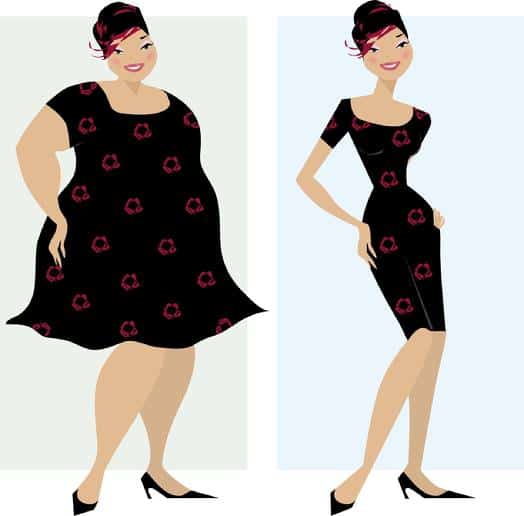
Losing fat should be a personal victory and a cause of celebration. Unfortunately, it is also an emotional roller coaster. Once the great euphoria and the well-earned feeling of victory over the fat subside, thousands of people who lost weight look in the mirror and do not recognize themselves.
They are no longer fat – but they are not thin either. They feel like thin people who are trapped within a deflated shell of a person they worked extremely hard to put behind. In many, depression sets in when it appears their hard work was unfairly repaid by now having to permanently carry on the extra skin and other loose reminders of their former selves.
No need to be depressed – Body Contouring Plastic Surgery can help you. Dr. Peter Aldea and Dr. Patricia Eby are experts in After Weight Loss Plastic Surgery and Body Contouring Cosmetic Surgery (gastric bypass plastic surgery). They offer the full range of procedures intended to tighten loose skin, lift sagging arms, faces, breasts, buttocks and thighs.
At Cosmetic Surgery Specialists Of Memphis, this care is provided by Dr. Peter Aldea and Dr. Patricia Eby, dedicated surgical professionals certified and re-certified by the American Board of Plastic Surgery. They are proud members of multiple professional societies including the American Society of Plastic Surgeons (ASPS). Their approach emphasizes highly individualized planning, discretion and privacy, and careful guidance on what you should and should not expect from surgery.
Why People Consider Plastic Surgery After Weight Loss
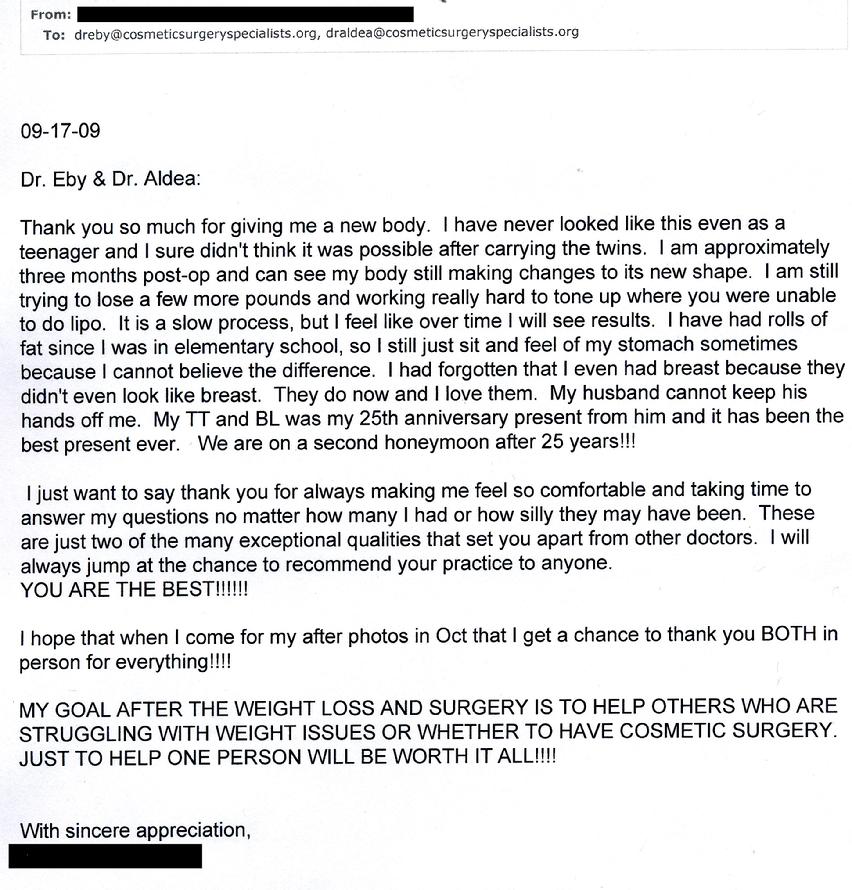
“Losing 120 (40%) of my body weight, I felt so triumphant. But my spirits would plummet every time I looked in the mirror: the huge flap of skin on my belly and my sagging breasts seemed to be another obstacle in my achieving an attractive figure. While researching cosmetic surgery options on the Internet, I discovered Cosmetic Surgery Specialists of Memphis. After my initial consultation with Dr. Aldea and Dr. Eby, I was convinced that I should have surgery AND that they were the right surgeons for me. Dr. Aldea took all the time necessary to explain the procedure and allow me to ask questions. I appreciate how he was very careful to explain to me what I should as well as should not expect from surgery. I was very impressed with their knowledge, skill, professionalism and compassion. Dr. Aldea performed a tummy tuck and Dr. Eby performed a breast lift for me. They both were very compassionate and helped me to feel less anxious about having surgery. This was my first surgery ever, so I was quite nervous. The Cosmetic Surgery Specialists staff are wonderful- very helpful and so nice. Dr. Eby called to check on me after the surgery and she and Dr. Aldea were very attentive during my recovery. Dr. Eby is so sweet – I just love her! And she makes very pretty breasts, too! Today I just love looking in the mirror: I have perky breasts (which my boyfriend loves), a tiny waist and a flat tummy!!! People are amazed at my transformation and I get compliments all the time. I love to shop for clothes now. I used to wear long shirts to hide the bulge the showed from my belly flap, but now I wear smaller clothes that show off my tiny waist. This is so great: I can wear cute, skinny-girl clothes now!!! At the lake last summer, I wore a bikini for the first time in my 42 years! Thank you Dr. Aldea and Dr. Eby!!! I am so happy with the surgery results that I plan to have a butt lift this year and a face lift sometime in the future to correct the sagging skin that weight loss produced in those areas. And I want Drs. Aldea and Eby to perform those surgeries as well! I am so glad that I found these wonderful surgeons. They really have helped to transform my life.”
Obesity is an Epidemic
Before examining Plastic Surgery after Bariatric Surgery, a few comments on obesity.
Obesity Is An Epidemic
Obesity had become an integral but unwelcome part of our culture. The fact that there are at least 70 different other ways in English to describe “obese” amply underscores its prevalence.
Obesity is THE global epidemic of the 21st century. It kills more people than HIV or the Ebola viruses. According to the National Center for Health Statistics, over a third of Americans (60 million of adults and over 9 million children) are obese (by definition, have a Body Mass Index (BMI) of 30 or higher.
The South boasts the most obese states in the Union with Mississippi having the highest rate of adult obesity.
Obesity Is A Health Crisis
While obesity may destroy your appearance, it causes much more extensive hidden damages. Next to nicotine intake, Morbid Obesity (100 pounds or more overweight or BMI of 40 and higher) is associated with disease and destruction throughout the body. It has been found to cause and rapidly aggravate: diabetes, hypertension, atherosclerosis (hardening and blocking of arteries), heart attacks and strokes, arthritis (destruction of
joints),various types of hard to repair hernias, back problems, asthma and lung disease, obstructive sleep apnea with snoring, gall stones, skin conditions, infertility, varicose veins with phlebitis and psychiatric conditions. Worse yet, obesity is associated with an increased risk of several cancers.
Obesity Is Very Expensive
The National Institutes of Health (NIH) estimated that the annual costs of treating obesity-related conditions – including diabetes, heart disease, osteoarthritis and breast and colon cancers – are at least $120 billion. Obesity largely isolates its sufferers by interfering with exercise, personal hygiene and having normal sexual relations. Obese workers cost employers $12 billion annually in medical bills, reduced productivity, increased absenteeism and higher insurance premiums. Overall, obesity is second only to tobacco as a preventable cause of death. Lastly, our society discriminates against overweight people. They are less likely to get into college, less likely to get hired and more likely to get fired. In 2008, the US Senate describing obesity “a medical emergency of hurricane like proportions” which is wreaking havoc “on our families, on our society and on our health care system”, introduced the Obesity Prevention Act of 2008.
Cause of Obesity
We all know that consuming “more” calories (food energy units) than we use up leads to obesity.
In fact, our body behaves much like a sink with the faucet water running. The amount of water flowing into the sink represents the amount of calories we consume while the amount of water that flows out the drain nicely represents the number of calories we burn with physical activity. No matter how high our caloric intake is, as long as our caloric use (i.e. the volume of water draining out) matches our caloric intake (i.e. volume of water inflow into the sink), water will never fill the sink (i.e. there will be no fat deposited, or obesity).
In prolonged fasting or starvation, our caloric intake falls below our basic caloric needs. As a result, the body becomes too weak to engage in physical activity and is forced to consume all its fat reserves followed by other body tissues to keep us alive. This results in weight loss followed by wasting. On the other hand, a high caloric intake gives us the energy to engage in strenuous activity. If we perform equally physically demanding activities, the excess calories eaten are burned. (A perfect example is Olympic swimmer Michael Phelps, who reportedly consumed a high-fat, high-carbohydrate diet of 12,000 calories a day while in training. This is 3 – 4 times the 2,500-3,000 calories a day recommended by the U.S. Food and Drug Administration).
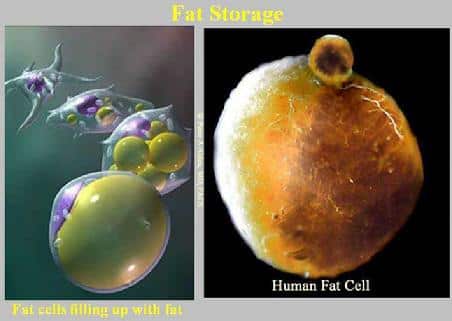
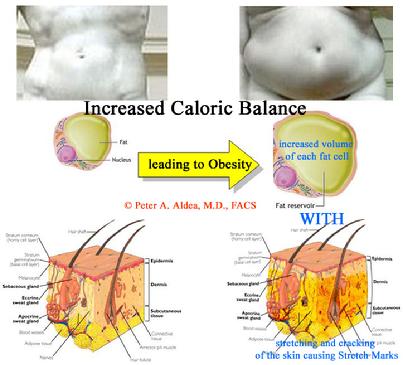
| When we consume more food calories than we use, the excess food is transformed into fat and stored in our bodies’ granaries, silos and storage facilities – our fat cells (also termed adipocytes or lipocytes) to be burned later. Continuous fat accumulation leads to obesity. Unlike our distant ancestors whose days were shorter and who had to expend physical labor, our lives are much easier. Not only do we live longer, but we have longer days in which we are surrounded by repeated opportunities for caloric intake but which are not necessarily matched by equal or higher caloric demands (for example rigorous physical activity). This results in a continuous caloric positive balance which is ultimately responsible for our global epidemic of obesity. Diet and exercise alone are rarely permanently successful. As the hundreds of diets, weight loss centers, thousands of books and videos attest, while many people lose some weight temporarily, the results are rarely long-lasting. This is especially true in people who are 100 pounds or more over ideal body weight. For this group, weight loss (bariatric, gastric bypass or stomach-shrinking) surgery has helped many lose more than 50 percent of their excess weight and has become a life saver for tens of thousands of people world-wide. |
Morbid Obesity Care = Bariatric Surgery
Bariatric surgery reduces those medical costs in the long run. Type 2 obese diabetics, whose care accounted for $98 billion of obesity-related costs, normalize their blood sugar levels within a few days after the stomach bypass procedure. Even the Blue Cross and Blue Shield Association concluded that that surgery is far more effective than diet and exercise in treating morbidly obese patients.Weight loss (Bariatric) surgical procedures fall into 2 categories: gastric bypass surgery (the most common of which is the roux-en-y gastric bypass procedure) and restrictive banding surgery (such as the LAP-BAND® System surgery). These operations are continuing to improve.
The popularity of weight loss surgical procedures has dramatically increased after it became known that many popular formerly obese public figures had undergone such procedures. Among this group are : Al Roker of “Today” on NBC, Sharon Osbourne (wife or rocker Ozzy), Aretha Franklin, Roseanne Barr, NY congressman Jerrold Nadler, Randy Jackson of “American Idol”, Carnie Wilson and Star Jones, formerly of “The View”, among many others.
Obesity: A Few Key Context Points
Fat Location Matters
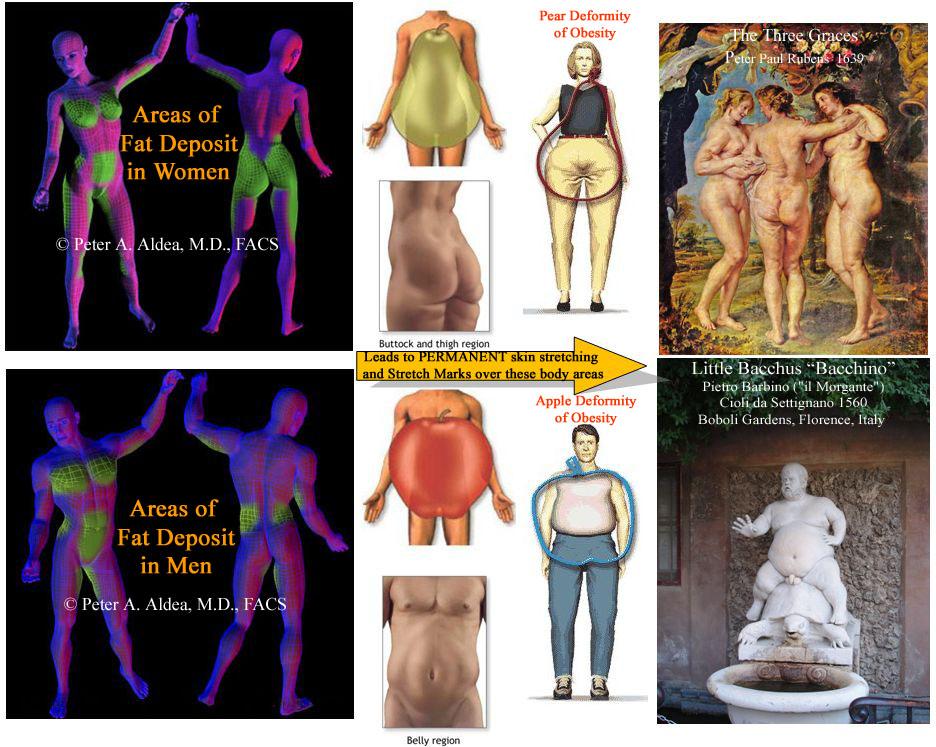
Anatomically, the fat in our body can be regarded as two types. A large part of our fat found just under our skin, (subcutaneous fat), is sandwiched under the deepest layer of our skin and our muscles and serves as an insulating layer. The distribution of subcutaneous fat is depends on your gender. Due to their higher estrogen levels, women have larger fat cell concentrations over their buttocks, hips and thighs (Pear Shape) while men have higher fat deposit areas around the central trunk (Apple Shape). The other group of fat is the retroperitoneal and visceral fat found inside the abdominal cavity and on its wall. An excess of this fat has been associated with heart disease and diabetes.
From a Plastic Surgery perspective, while the fat directly under the skin may be reached and reduced by liposuction, the fat inside the belly (retroperitoneal and visceral fat) cannot be surgically scraped, cut or vacuumed and can only be reduced by either diet, exercise or weight loss surgery.
Stretch Marks Are Skin Cracks
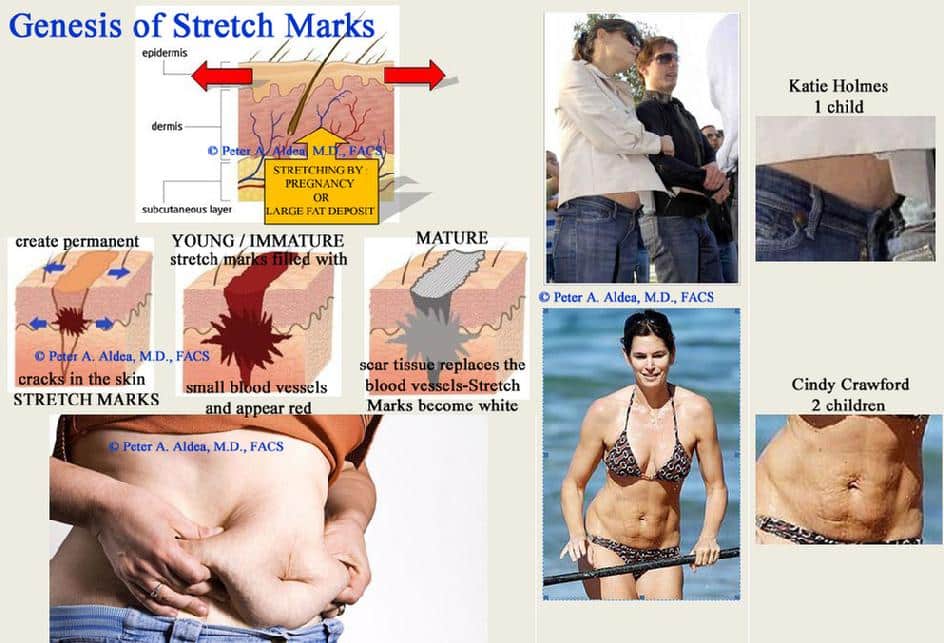
Since stretch marks are in fact skin cracks, they cannot be removed non-surgically and are not erasable by any of the thousands of fad “cures” out there. Like all other scars, stretch marks are through and through permanent cracks in the skin which cannot be removed with any lotion, cream or lasers.
Weight Loss = Deflation = Sagging
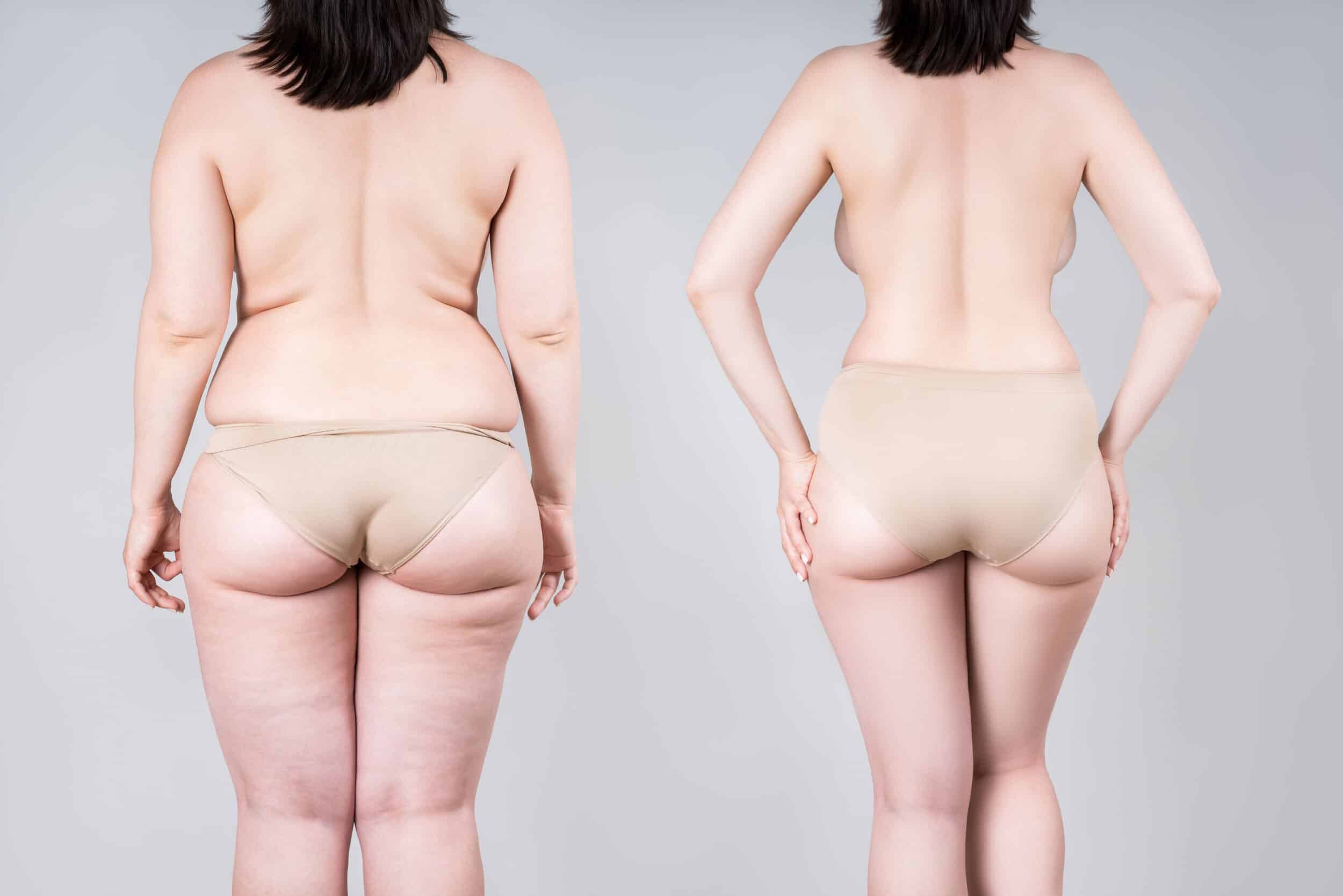
After losing massive amounts of weight, many people are disappointed to find out that their skin has not shrunk to fit their new, smaller frames. These people often look and feel as if they are trapped in someone else’s oversized deflated body. The job of the plastic surgeon is to use his/her artistic sense to free you from your “old” body, tighten loose skin and get you the body you worked so hard to get.
Common Areas Addressed After Weight Loss
Patients who have undergone significant weight loss usually have many areas of skin looseness, overhang and folds accentuated by various pockets of residual fat of the face, neck, tummy (i.e. apron “panniculus), arms, breasts, buttocks, and thighs.
Face
The emptying of the face results in an aged, droopy deflated face and neck skin with sagging, hanging skin with deeper more accentuated wrinkles and jowling. This is nicely correctable with facelift surgery (Rhytidectomy).
Neck
The emptied neck is often even more unsightly and has been unflatteringly termed a Turkey Neck or Gobbler Neck Deformity – correctable with a face and neck lifting surgery.
Eyelids
The eye lids have excess skin giving them an older and tired look – correctable with an eyelid lift surgery
Arms
The arm skin is often loose, hanging with a variable amount of residual fat (“Bat wing Deformity”). This is correctable with an Arm Lift plastic surgery (Brachioplasty)
Breasts (Women And Men)
The breasts, in both men and women, often have a “Wind Sock” or “Rock in a sock” appearance. They are often deflated, empty and sagging with skin excess extending to the sides. –This is correctable with a breast lift surgery (Mastopexy), with or without implants, in women to improve shape, fullness and cleavage.
Abdomen And Trunk
The abdomen and trunk empty to a different extent in different people. Overall, it frequently looks like a church bell or lampshade. The six pack (rectus) muscles remain lax and spread to the sides allowing a huge pooch when standing and a hammock appearance when leaning over. Three to four folds, resembling window drapes, curve forward along the sides and overlap each other. In the front, there often is an exaggerated overhang of a loose, hanging skin apron (panniculus) covering over the genitals. – The front is correctable with a tummy tuck surgery or a lower body lift procedure to contour the abdomen, hips and buttocks.
Pubic Mound (Mons Pubis / Mons Veneris)
In front and inferiorly, the deflated mons Venus (mons Veneris) and the genitalia below often unflatteringly droop downwards towards the floor. It can be nicely shaped and lifted to a more youthful position during a tummy tuck surgery.
Buttocks
The buttocks are often empty, deflated and sagging with a deepening of the under buttock crease. They can be filled with fat transfer to the buttock (Brazilian Butt lift) or combined with either a butt lift procedure or a body lift surgery.
Thighs
The thighs present a different array of combination of partial fat deflation and sagging rolls of skin which have been described as both “Saddle Bag Deformity” and “Riding Breeches Deformity”. The thighs can be tightened with a lateral and or inner thigh lift surgery. Milder forms can be treated with liposuction (or VASER liposelection).
Key Procedures Explained More Clearly
Abdominoplasty (Tummy Tuck) vs Panniculectomy
There are two main procedures: Abdominoplasty (Tummy Tuck) and Panniculectomy (Greek for Apron excision). With the only similarities that they use a similar incision on the lower abdomen, these procedures are very different and are needlessly confused. We are now going to clear that confusion.
A Tummy tuck (or Abdominoplasty) will remove all the excess skin and fat from the middle and lower abdomen, tighten the muscles of the abdominal wall and flatten the entire tummy. In the process, the belly button is brought out in its same position through the skin which was pulled down. An abdominoplasty can be combined with other body contouring procedures of the back, the arms or the breasts, depending on the patient’s preference.
On the other hand, a Panniculectomy is a much less involved operation. It simply removes the overhanging apron of abdominal fat and skin from below the belly button. Period. It does not tighten the abdominal muscles and does not tighten the skin of the entire abdomen. The belly button is not relocated to allow the removal of loose skin below and above it. This operation is NOT a cosmetic operation and is done only for reducing moisture, recurrent infections and rashes in the groin fold as well as to reduce the weight of the overhang. For this reason, depending on your actual insurance policy, SOME insurance company may partially pay the cost of panniculectomy while they will never pay the cost of an abdominoplasty. (Please, see table below)
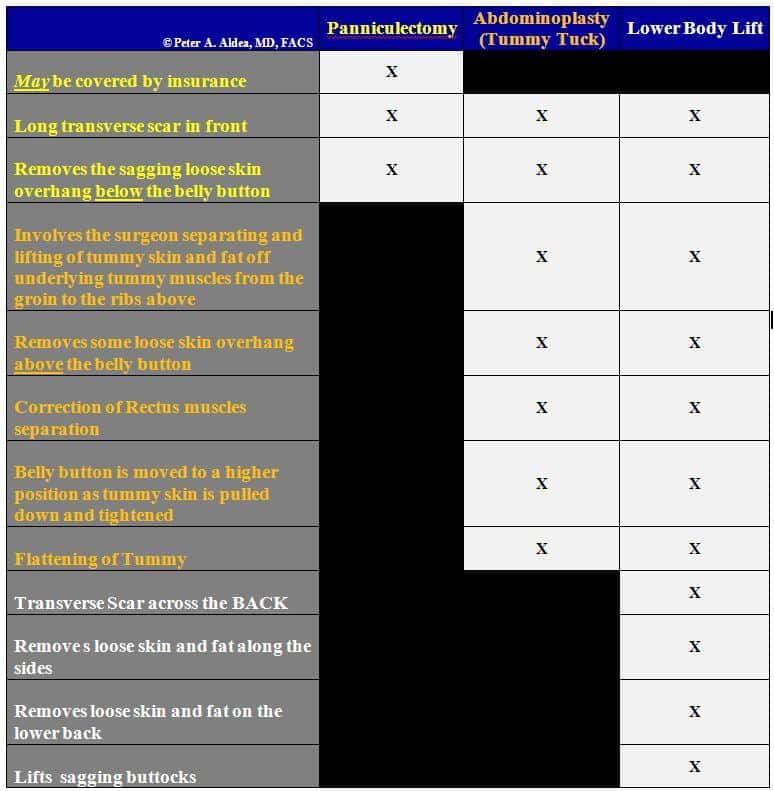
An Abdominoplasty may remove an additional 4.5 to 7 pounds while a Lower body Lift usually removes 9 pounds or more.
Brazilian Butt Lift
The buttocks are the accent of the lower back and the focus of sexual attraction for both sexes. As they get larger and heavier with obesity, their skin and that of the supporting lower back is overstretched leading to drooping. As the weight is lost, the buttocks become deflated, sagging and wrinkly. To make things worse, the fat of the lower back is often not lost and gives the impression that the underlying buttocks are either missing or very flat. Rejuvenation of the buttocks is extremely individual. In some people, liposuction of the low back fat by itself, may well define the top of the buttocks and make them look attractive. In others, such liposuction may need to be combined with Fat Buttock Augmentation (“Brazilian Butt Lift”) and in others a formal buttock lift may be called for. In this procedure, similar to a tummy tuck for the front, the stretched out skin of the lower back is removed and the buttocks are lifted to a higher more youthful position. A transverse side to side scar is then left across the back.
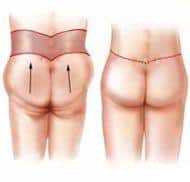
Tummy Tuck + Buttock Lift = Lower Body Lift
When a tummy tuck is combined with a buttock lift at the same time, the operation is termed a Lower Body Lift Surgery. The body lift operation is a long operation which flattens the tummy and lifts the thighs and buttocks. In exchange for a circumferential belt-like scar and a long recovery, it often produces a flatter belly with a more defined hourglass waist, lifted outer thighs, and higher buttocks. These procedures are never covered by medical insurance.
Brachioplasty
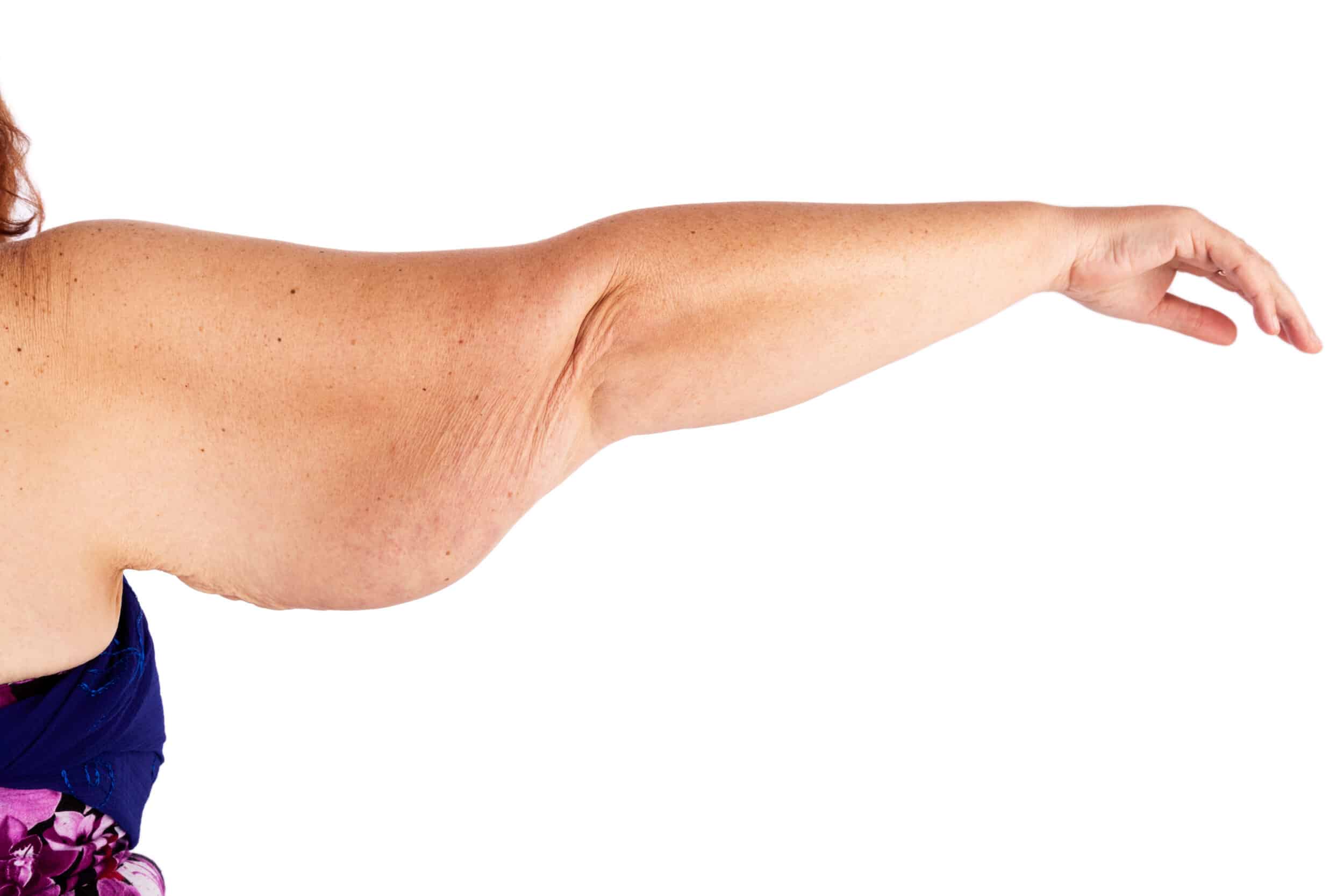
The deflation of the arms after weight loss leaves in its wake several common deformity patterns which can be especially embarrassing for those who want to wear short sleeve or sleeveless garments. Unfortunately, working out in the gym to build up the underlying muscles will do nothing to re-tighten the loose skin. In some, empty extra skin hangs from the arms, creating a “bat wing deformity”. In others, the skin has relatively good tone but is still full of unsightly giggly fat. In others, the skin tone is poor and the arms have both loose skin and a lot of residual fat. Each one of these three presentations needs to be treated differently.
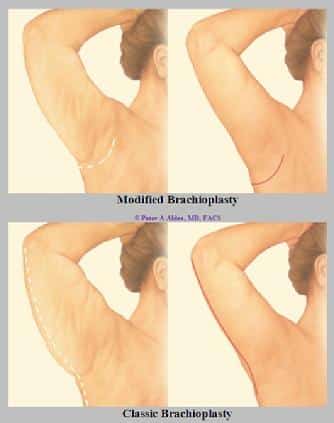
In those with excess arm fat and relatively good skin tone, liposuction of the arms may correct the deformity. Those with emptied arms with a lot of hanging skin would require a Brachioplasty (arm lift) – a surgical removal of the loose arm skin. The extent of the arm skin excess will dictate the length of the scar. With only mild extra skin, a modified Brachioplasty – Arm Lift (aka minimal incision brachioplasty) may be done. The plastic surgeon tightens the excess skin of the arm and armpit with a more concealable armpit scar. With large skin excess, a Classic Brachioplasty would need to be done. Here, the excess skin is removed leaving a scar in the brachial groove along the inner aspect of the arm which extends the length of the skin excess (from the elbow to the arm pit or farther on the chest wall). In those with a combination of both extra skin and fat in the arms, a brachioplasty may need to be done either after liposuction (to preliminary empty the arms) or at the same time.
Thigh Lift
Obesity and aging presents a multitude of challenging thigh deformities. Typically, we see bulging of the outer thighs, fullness of the inner thighs which then rub together and folds of loose hanging skin. These have been described as Riding Breeches or Saddle Bags Deformities. The extent of the deformity and its importance to you will determine which procedure will be used to correct it.
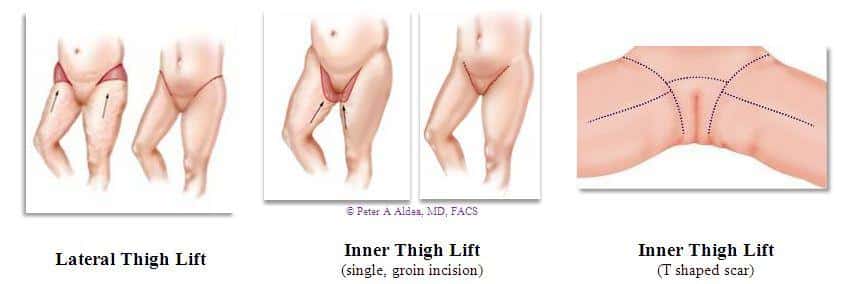
If the droopiness is mostly located on the outer, lateral side of the thigh, a Lateral Thigh Lift (with or without liposuction) would be used. It is a shorter version of the buttock life we discussed higher (which itself is a component of a lower body lift). With a lateral thigh lift the excess hip and thigh skin and fat are removed and the thigh is lifted higher resulting in skin tightening of the front and sides of the thighs in exchange for a scar.
If the thigh droopiness and excess are mostly along the inner thigh, an Inner Thigh Lift is called for. Depending on the looseness, the incision is placed very close to the inner junction of the thighs with the trunk. The loose skin is undermined, a crescent shaped skin and fat excess is removed and the thigh skin is pulled upward like a pair of pantyhose leaving a scar along the groin and beneath the buttocks. In some people, the looseness is not only in the vertical direction but along the transverse direction of the thighs as well. In these people, we need to narrow these thighs and lift them. This is done by adding a vertical seam (T shaped) scar from the groin crease scar down the inner thigh.
While multiple body contouring procedures can sometimes be performed during one or two longer surgeries, this approach may increase the risk of complications related to extended operative time, blood loss, and fluid changes. For many patients, staging procedures over multiple surgeries is often the safer and more effective option.
Prioritizing and Staging of Body Contouring Procedures
When Can Surgery Begin?
To achieve the best possible results, we need to wait for your weight to level off and become stable. There is no point in operating on you while you continue to lose weight. The results of procedures done too early can be made worse by further weight loss or gain. Doing so may even force us to repeat the surgery. The best candidates for body restoration are men or women in relatively good health with stable, non fluctuating weight. This usually means having to wait between 7 to 24 months (average 1 year) after your weight loss surgery.
Which Procedure First? How Many At Once?
To ensure the best possible outcomes and for your safety, such surgeries are usually “staged” in order of your priority. Depending on your particular wishes, you and Dr. Aldea and, or Dr. Eby will review which procedure(s) may best serve you and plan how we may best get you to your cosmetic goals. Common staging could be as follows: 1. Tummy tuck (Abdominoplasty) 2. Breast lift, 3. Arm lift 4. Thigh lift / Buttock lift while a Face lift, if desired, to correct jowls and a “turkey neck” deformity, can be done anytime. Your preferences and priorities may be different and there is no reason to follow this sequence over your preferences.
Upsides And Downsides
Upsides
As you saw from our patient’s testimonial letter at the top, Plastic Surgery after Weight Loss Procedures are very gratifying for both the patient and the surgeon. They dramatically unveil the underlying figure you work so hard to get, they improve self-esteem and allow you to wear normal clothes you could not wear before.
Downsides
Plastic Surgery after Weight loss, however gratifying, always involves the exchange of loose skin for scars. If you are not willing to accept scars, you should not have these operations, as no ethical surgeon can predict how the scars will heal on you.
Although your weight loss surgery was probably “covered” by your medical insurance, your plastic surgery at this point will not be. Fair or not, since it is regarded by insurance companies not “medically necessary” and as cosmetic in nature, they must be pre-paid out of pocket.
In an effort to simplify your care, Dr. Aldea, Dr. Eby and Cosmetic Surgery Specialists of Memphis, PLLC have adopted the following policy:
- All people desiring body contouring following massive weight loss will be considered “cosmetic” patients.
- As cosmetic patients, a price estimate will be provided to you after your consultation which will include the surgeon(s) fee, anesthesia and facility charges. If other charges apply they will be noted.
- As a courtesy, upon request our office may provide you with procedure (CPT) codes, operative reports and office notes which you may wish to submit to your insurance after your operation to see if they would reimburse you. However, we do not guarantee in any way that your providing this documentation to them will result in any payment to you from your insurer.
Cost And Affordability Notes
Body contouring procedures are a significant investment, but treatment costs in Memphis are often more affordable than in many larger metropolitan areas. Pricing varies based on the procedures performed and the complexity of the surgical plan, and in many cases, our fees compare favorably to national averages for board-certified plastic surgeons.
To help make treatment more accessible, we also work with several financing providers and offer resources to help patients better understand procedure costs and payment options.
Why Choose Cosmetic Surgery Specialists Of Memphis For Massive Weight Loss Restoration?
Massive weight loss restoration is not one procedure, but a staged, customized plan based on your body, your skin quality, and your priorities. Dr. Aldea and Dr. Eby approach these procedures with an artistic, whole-patient philosophy, focusing on freeing you from excess skin and reshaping the areas that most affect how you look and feel. As American Board of Plastic Surgery certified and re-certified surgeons, they emphasize safety, careful planning, and honest guidance about expectations, including the trade-off between skin removal and scarring.
Patients also value the practice’s commitment to individualized care, attentive follow-up, and a supportive, professional environment as you move through the stages of your transformation.
Reclaim Yourself With Massive Weight Loss Restoration In Memphis, TN
If you have achieved major weight loss and want help addressing excess skin, deflation, and lingering contour concerns, Cosmetic Surgery Specialists Of Memphis can help you explore your options and build a plan based on your goals and priorities. Contact Cosmetic Surgery Specialists Of Memphis in Memphis, TN at (901) 752-1412 to schedule a consultation.